


ACM Thessaly Circle : Historical legacy of the green marble of Hassabali

The ACM Circle of Thessaly organizes a conference on the historical legacy of the green marble of Hassabali. A noble material that represents a symbolic link between East and West, and has served as a valuable structural and decorative element for the construction of the basilic of Saint Mark in Venice and Hagia Sophia in Constantinople, as well as among the laity and the spiritual.
La conférence organisée sur le marbre vert de Thessalie à Larissa le Vendredi 9 Novembre 2018, a été une grande réussite et la salle du musée diachronique s’est avérée « petite » pour les participants qui étaient venus très nombreux.
Une rencontre scientifique et culturelle en présence du président de la Région de Thessalie Kostas Agorastos plusieurs conseillers régionaux et l’adjoint au maire de la ville de Larissa Apostolis Sourlandzis, la directrice du musée Stavroula Sdrolia et de nombreux représentants des différents organismes de la région.
L’auteur du livre «Le marbre vert thessalien de Hassabali» Vassilis Melfos, a présenté ses travaux sur ce thème, avec tous les détails et une richesse d’information, entre autre, sur la présence de ce marbre dans plusieurs vestiges, souvent, parmi les plus célèbres du monde.
Des membres du cercle de Thessalie étaient présents et sur le panel Nikolas Bogiazides, représentant de la Fondation Assemblée des Citoyens et des Citoyennes de la Méditerranée, a insisté, dans son discours, sur le fait que l’histoire bimillénaire de l’exploitation, diffusion et utilisation du marbre vert de Thessalie reflète, et met en exergue, certains traits fondamentaux de la civilisation et du modèle productif méditerranéen. Or, l’épopée du marbre de Thessalie fait preuve de l’importance pour les peuples et pays du pourtour méditerranéen des réseaux de transport et de transfert, de marchandises, de connaissances, de valeurs civilisationnelles, passant de l’éminemment conceptuel (p. ex. religions monothéistes) au détail des styles architecturaux et décoratifs. La pierre en question fut transportée pendant des siècles aux fins coins de l’espace méditerranéen et utilisée dans maints édifices célèbres, publics et prives, monumentaux et religieux. Elle représente un trait d’union symbolique entre Orient et Occident, ayant servi en tant que précieux élément structurel et décoratif à la construction des basiliques de Saint-Marc à Venise et Sainte-Sophie à Constantinople, ainsi qu’entre le laïque et le spirituel ornant, aujourd’hui encore, différents bâtiments d’état, églises, catholiques comme orthodoxes, mosquées et synagogues.

Ricard Pérez Casado: The Mediterranean and Europe

02.11.2018. Levante-EMV

The reaction against this situation has to be citizen, on our side reinforcing the more Europe idea. The Mediterranean Citizen’s Assembly Foundation with its headquarters in more than twenty riverine countries, has understood this, also with other organizations of a truly civil society. Solidarity is part of our culture, do not let it will be swallowed by the sewer of interests that are not part of the citizenship.
Professor Maria Donzzeli International Standout Women Award 2018

Professor Maria Donzzeli, ACM Foundation Governing board member has been awarded with the International Standout Women Award 2018. The recognition is supported by the Equality Councilor of the Province of Brescia and by the PromAzioni 360 Association of Darfo Boario (Brescia) and dedicated to women who have distinguished themselves in various fields. The ceremony has reached its fifth edition, becoming a reference point in areas of their competence.
“It’s an unexpected award, I’m gratified to have been chosen among many women for a recognition that I’m carrying out in these years, in the academic world, with a cultural and civil commitment, involving more and more people through lessons, conferences and debates. I am grateful to the equal councilor for the creation of the prize that is given to me “, says Maria Donzelli.
Congratulations!
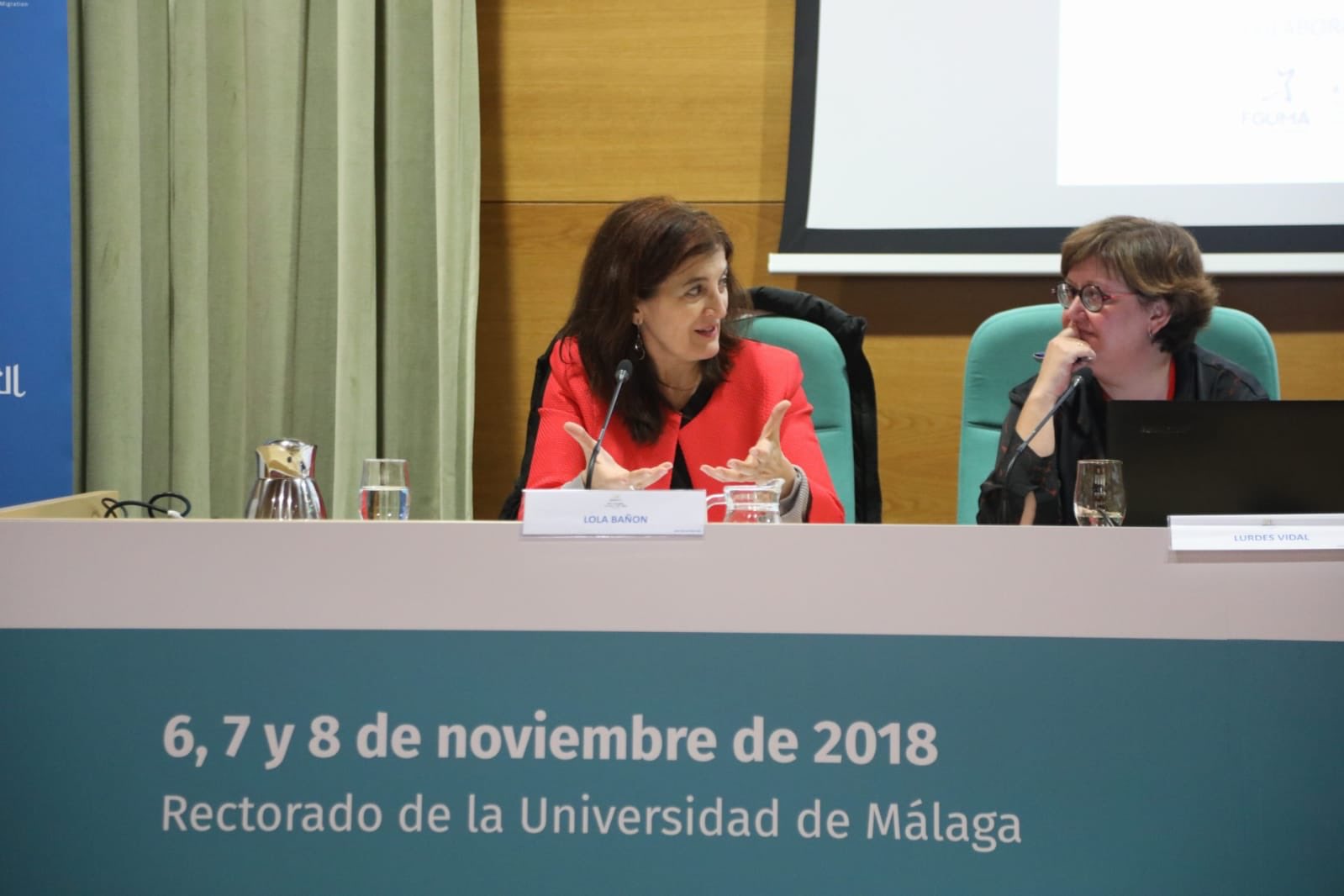
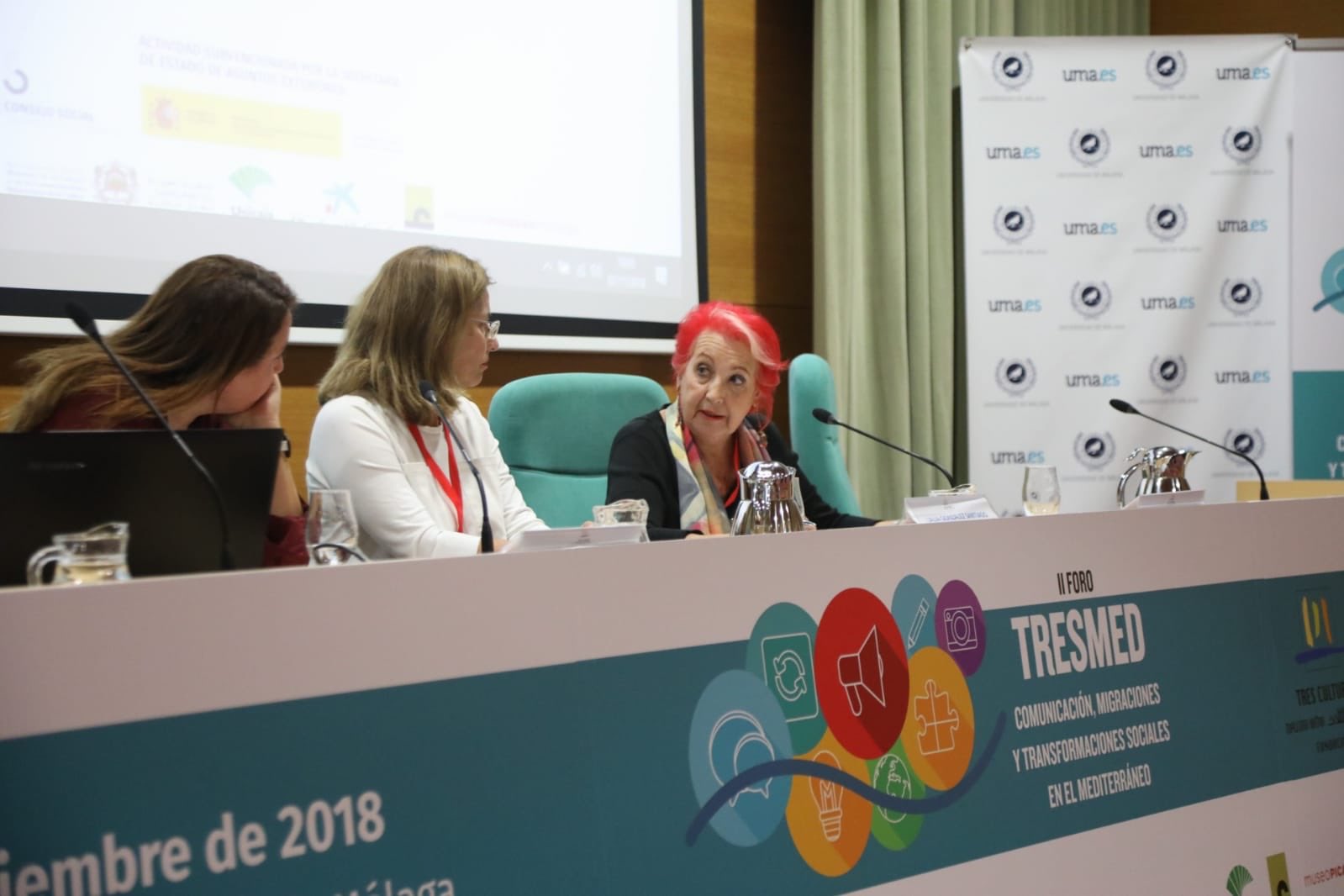
The ACM Foundation at the TRESMED Congress on journalism in the Mediterranean

A reference meeting that is articulated from several round tables in which the role of the media (both the current one and the one they can play) is analyzed in different aspects related to the Mediterranean and the coastal countries , epicenter of most current issues in various areas: politics, economy, events, society, culture.
Various speakers from different professional fields: professors, sociologists, experts in Arab World, communication professors and journalists such as Rosa María Calaf, Ángeles Espinosa, Awatef Ketiti, Antonio Méndez, José Ramón Mendaza, Carmen Rengel, Belén Torres, Eva Sáiz and Lola Bañon. The director of the ACM Foundation has intervened as a speaker and moderator, analyzing the precariousness of the journalism profession in the Mediterranean and, on the other hand, the threats to freedom of expression in the region.
Además, de las ponencias se han presentado los resultados de dos importantes y novedosos estudios sobre esta temática. De un lado, Carmen Fernández Morillo habló sobre la investigación realizada por el Consejo Audiovisual de Andalucía sobre la imagen que las televisiones transmiten de la inmigración, el seguimiento de los códigos éticos y la presencia del fenómeno migratorio en los informativos televisivos durante la última década. Por otra parte, Pedro Rojo, presidente de la Fundación Al Fanar y co-director del Observatorio de la Islamofobia en los Medios, explicó el trabajo que está realizando este observatorio y expuso las conclusiones más significativas de su último informe.
Actividades complementarias
Junto a las sesiones académicas propiamente dichas, el foro ha contado con tres actividades complementarias, la primera de las cuales, centrada en la tarde del 6 de noviembre consistió en un taller de fotoperiodismo impartido por dos nombres propios de la profesión: Emilio Morenatti (ganador del World Press Photo, entre otros muchos galardones) y Manu Brabo (Premio Pulitzer 2013), quienes inauguraron la exposición Fronteras, una selección de 40 fotografías que acerca al espectador al dolor, la guerra, la desesperación y el deseo de buscar horizontes de esperanza.
Además, se programó un concierto del grupo Lazywall en el auditorio del Musseo Picasso Málaga, el día 7 a partir de las 20.00 horas, y la emisión en directo del programa La hora de Andalucía de Canal Sur Radio.
La Fundación Tres Culturas, la Universidad de Málaga y el Consejo Social UMA han organizado el II Foro TRESMED ‘Comunicación, migraciones y transformaciones sociales en el Mediterráneo’, que se ha celebrado del 6 al 8 de noviembre en el Rectorado de la Universidad de Málaga.

AMEL and ACM Foundation organize in Libanon a round table on the situation of persons in exile

Via Orient Le Jour
La journée a commencé par une visite des centres de santé de Amel et s’est poursuivie par une visite des camps de réfugiés de la région de Beyrouth et de la Békaa ainsi que des camps de réfugiés de Sabra et Chatila. Parmi les participants, le président de la Fondation des citoyens et citoyennes de la Méditerranée (FACM) et ancien député européen, Vincent Garces, et Lola Bañon, professeure à l’Université de Valence et journaliste. Durant la visite, le groupe a rencontré des activistes libanais et palestiniens influents dans leurs communautés. Deux sujets ont été débattus : la situation des personnes en exil et la crise migratoire dans la région et ses conséquences.
Il y a eu aussi deux tables rondes auxquelles ont assisté le Pr Georges Corm, le Dr Kamel Mehanna, président de l’association Amel, Virginie Lefèvre, responsable des programmes de Amel, et le révérend Pierre Lacoste, ainsi que Xavier Longchambon Rajon, président de l’association Les Enfants de la Méditerranée (LEM). Au cœur des débats, les questions épineuses de la région méditerranéenne. La cause palestinienne et les différents moyens de pression utilisés pour aboutir à des politiques préventives, ainsi que la responsabilité de la communauté internationale concernant des milliers de demandeurs d’asile et de migrants qui meurent chaque année en Méditerranée à la recherche d’une vie plus digne ont été longuement évoqués.
Cette initiative s’inscrit dans le cadre du Mouvement euro-méditerranéen pour la défense des réfugiés et des migrants en exil dirigé par « Amel Association » et « Samusocial », récemment lancé dans la ville de Rome. Ce mouvement promeut la solidarité envers les réfugiés qui font souvent face à un discours isolationniste et islamophobe répandu en Europe et en Occident. De plus, depuis le début de l’année 2018 jusqu’à ce jour, on recense environ 2 000 cas de naufrage de migrants et des milliers de cas de traite d’êtres humains, ainsi que d’importantes violations des droits de l’homme en Méditerranée.
Les participants à la table ronde ont souligné la nécessité d’aboutir à un esprit de solidarité humaine face au racisme, à l’isolationnisme et au sectarisme qui touchent la plupart des pays occidentaux et notamment l’Europe, qui ferme ses frontières face aux fugitifs de la mort. Les participants sont convenus de travailler à deux niveaux fondamentaux : tout d’abord la recherche d’une forme de solidarité et de coopération entre les peuples du bassin méditerranéen. Ensuite, la création d’un observatoire des droits de l’homme pour surveiller et analyser les conflits dans la région. Finalement, les participants ont affirmé la nécessité d’élaborer des propositions de politiques préventives alternatives, et de chercher à ouvrir des canaux efficaces de communication entre les peuples.


THE ACM FOUNDATION STRENGTHENS ITS CITIZEN NETWORK BY EXTENDING THE ACM CIRCLE OF BEIRUT

The ACM Foundation held on October 21 and 25 in Lebanon, a mission of citizen diplomacy with the aim of strengthening the ACM circle of the Lebanese capital, as well as knowing the work of various collaborating entities in the promotion of projects with refugees. Vicent Garcés and Lola Bañon, President and Director respectively of the ACM Foundation, participated in the mission.
During their stay in Lebanon, they have had the opportunity to learn about the work of assistance and support for refugees from the Amel Association International entity in a country that receives more than one and a half million refugees.
They visited the Khiara refugee camp in the Bekaa Valley, where most of the people come from Syria. Many of the families arrive from Rakaa and Aleppo, scenarios of an authentic humanitarian catastrophe. The situation of children, adolescents and women is especially delicate. More and more cases of childhood leukemia are detected, anemia among children and pregnant women is a constant. Amel carries out a comprehensive health, education and literacy project in this refugee camp.
The Amel association will continue having the support of the ACM Foundation in the development of the Euro-Mediterranean Movement of solidarity with people in exile, which both entities promote. The ACM Foundation has also visited the sadly famous Palestinian refugee camp of Sabra and Chatila, knowing in situ the enormous difficulties for the daily life of its people.
The ACM Foundation has reinforced and expanded the ACM Circle of Beirut, a city of reference in the framework of Mediterranean civil society. The ACM Circle of Beirut is composed of people involved in the defense of human rights and culture, with notable personal and professional careers and committed to the present and future of the Mediterranean peoples.
A fundamental idea highlighted by the President of the ACM Foundation, Vicent Garcés, in this quote is that “the Mediterranean space is not only history but also a geopolitical and human reality based on diversity. The refugee camps in Lebanon remind us of real atrocities committed and that should disappear from the international scene. Peace is the way, and violence and repression only lead to more violence and more repression. ”
The FACM will continue supporting initiatives of solidarity with people in exile.
The ACM Foundation at the Khiara refugee camp in Lebanon

The ACM Foundation has visited the Khiara refugee camp during our mission of citizen diplomacy to Lebanon. The ACM Foundation has had the opportunity to know on the ground the work of our partner Amel Association International in the assistance and support to persons in exile, in a country that is hosting more than a 1.5 million of refugees, half of its population.
In the Khiara refugee camp, in the Bekaa Valley, many of persons who are living there come fleeing the war in Syria. A lot of the families come from Rakaa and Aleppo, scenes of an authentic humanitarian catastrophe. The situation of children, adolescents and refugee women is especially delicate. More and more cases of childhood leukemia are detected, anemia among children and pregnant women is a constant.
Amel carries out here an integral health and education Project. From psychosocial assistance to children and adolescents, vaccination campaigns to literacy programs and prevention of child marriage. Congratulations to Amel for the extraordinary work that is developing with persons in exile, which will continue to count on the support of the ACM Foundation in the promotion and sharing of the Euro-Mediterranean solidarity movement.


